Beyond Comfort: The Hidden Science of the Perfect Seat
There is a specific, quiet frustration that comes from a house that is almost perfect. You’ve curated the lighting, the wall colors are exactly what you envisioned, and that vintage bench you found at the estate sale is a masterpiece of craftsmanship. But then, you sit down.
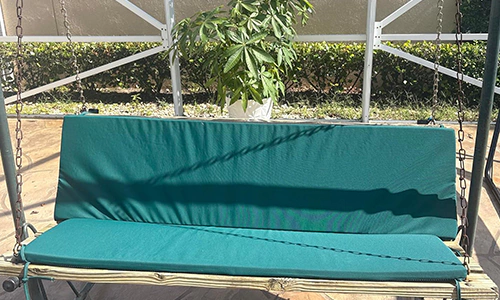
The “standard” cushion you bought online shifts. It’s too thin, so you feel the hard frame beneath. It’s too short, leaving an awkward gap that looks like an afterthought. In that moment, the luxury of your home evaporates.
This is the “Cushion Gap”—the space between a house that looks good and a home that feels extraordinary. In 2026, as we move further away from disposable “fast furniture” and toward intentional, sustainable living, custom cushions have emerged as the single most effective way to elevate both the aesthetics and the longevity of your living space.
The “Standard Size” Myth: Why Retailers Want You to Settle
If you walk into any big-box retailer in the US or UK, you’ll find rows of cushions labeled “Standard Large” or “Universal Fit.” From a manufacturing standpoint, these are brilliant. They are easy to vacuum-seal, cheap to warehouse, and require zero expertise to sell.
But your home isn’t a warehouse.
Most premium furniture—especially pieces from independent designers, imported teak sets, or architectural built-ins—does not follow a “standard.” A standard 48-inch bench cushion is often actually 47.5 inches to save on fabric costs. On a 48-inch bench, that half-inch gap on either side acts like a visual magnet for “cheapness.”
The Custom Advantage: When we talk about bespoke seating, we aren’t just talking about length and width. We are talking about contouring. A custom cushion respects the slight taper of a backrest, the radius of a curved corner, and the specific depth required for your leg length.
Material Intelligence: What’s Inside Your Cushion?
A common mistake homeowners make is choosing a cushion based solely on the color of the fabric. While aesthetics matter, the engineering beneath the surface determines whether your investment lasts ten years or ten months.
- The Foam Density Dilemma (The 1.8 lb Rule)
In the industry, foam is measured by density (weight per cubic foot), not just thickness.
Retail Cushions: Usually utilize 1.2 to 1.5 lb density foam. It feels soft in the store but “bottoms out” within a season.
Bespoke Quality: We utilize 1.8 to 2.5 lb High-Resilience (HR) Foam. This cellular structure acts like a thousands of tiny springs, returning to its original shape every time you stand up.
- Outdoor Resilience: Reticulated Foam vs. Standard Poly
If you are customizing for a patio or poolside, you need Reticulated (Dry-Fast) Foam. Standard foam acts like a sponge, trapping water and breeding mildew. Reticulated foam features large, open pores that allow water to pour straight through, drying in minutes rather than days. The Fabric Revolution: Performance Meets Luxury
The word “outdoor fabric” used to mean stiff, scratchy canvas that felt like a tent. Not anymore. The Sunbrella Standard
For 2026, Solution-Dyed Acrylics (led by brands like Sunbrella) remain the gold standard. Unlike traditional fabrics where the color is printed on the surface (think of a radish—red on the outside, white on the inside), solution-dyed fibers are saturated with pigment while they are still in a liquid state (think of a carrot—orange all the way through).
Why this matters for your SEO-ready home:
UV Resistance: It won’t fade under the harsh California sun or the erratic UK weather.
Cleanability: Spilled red wine? Use a diluted bleach solution. The color won’t budge, but the stain will.
Eco-Friendly: Because you aren’t replacing faded cushions every two years, you are keeping textiles out of landfills.
Design Specifics: The Aesthetics of Tailoring
A bespoke cushion is a piece of upholstery art. When ordering custom, you have three key styling decisions that define the “vibe” of your room:
Boxed with Welting (Piping): This is the “classic” look. The piping reinforces the seams and gives the cushion a crisp, architectural box shape. Perfect for formal dining rooms and luxury patios.
Knife-Edge: A cleaner, more modern look where the top and bottom fabrics meet at a single seam. This is ideal for minimalist spaces or throw-style bench pads.
Tufting: Using buttons or stitches to create “dimples.” This is the secret to that cozy, French-country “hygge” aesthetic for window seats and breakfast nooks.
Professional Measuring: The “No-Regret” Checklist
To ensure your custom order is a “one-and-done” success, follow this pro-level measuring protocol. Never measure your old cushion—always measure the furniture frame.
The Depth Check: Measure from the very back of the seat to the front edge. If your furniture has a curved back, measure from the deepest point.
The Taper Trap: Is your bench wider at the front than at the back? Many are. Provide both measurements to avoid a cushion that “bunches” at the rear.
Clearance Matters: If your bench has arms, ensure your chosen thickness (e.g., 4 inches) doesn’t sit higher than the armrests, which can look awkward and feel uncomfortable.
Use Cases: Where Custom Cushions Change the Game
The Dreamy Window Seat
A window nook is a wasted space without a cushion. A custom 3-inch pad transforms a cold ledge into a reading sanctuary.
The “Discontinued” Outdoor Set
Don’t throw away high-quality teak or wrought-iron frames just because the original manufacturer went out of business. Custom replacement cushions are the most sustainable way to “upcycle” premium furniture.
Mudrooms & Entryways
These high-traffic areas need high-durability fabrics. Customizing allows you to pick a heavy-duty weave that hides dirt while providing a soft place to take off boots.
Conclusion: The Cost of Quality vs. The Price of “Cheap”
It is tempting to save $50 on a mass-market cushion. But when that cushion fades by August, flattens by September, and ends up in a dumpster by October, you haven’t saved money—you’ve paid a “convenience tax.”
A custom cushion is a commitment to your home’s story. It is the difference between a seat and an experience. With the right foam, the right fabric, and an exact fit, you aren’t just buying decor; you’re investing in a decade of comfort.
[CTA: Browse Our 2026 Custom Fabric Collection & Get Your Instant Quote]
- SEO FAQ Schema
Q: How long do custom cushions last?
A: With high-resilience foam and solution-dyed fabrics, custom cushions typically last 5–10 years depending on usage and weather exposure.
Q: Can I wash my custom cushion covers?
A: Most of our custom covers feature a hidden zipper. We recommend spot cleaning or machine washing on a cold, gentle cycle and air drying.