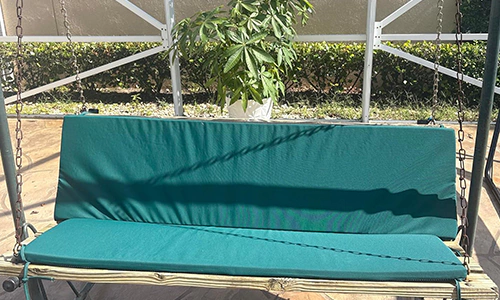
Spring Is Here: Time to Refresh Your Cushions (For Real This Time)
There’s a specific moment every spring: you step onto the patio or glance at your window nook, and something feels… off.
That sage green cushion? It’s now the color of an old newspaper. The foam that felt plush in October? It’s listing to one side like a sinking ship. We tell ourselves we’ll deal with it “later,” but later has arrived. Here is your stress-free guide to finally getting it right.
Why Spring? (It’s Not Just Marketing)
Early spring is the “sweet spot” for replacement. After a winter of storage or constant holiday seating, cushion foam often reaches a point of no return.
- The Structural Test: Press your palm into the cushion. If it takes more than three seconds to bounce back, the foam is structurally compromised. You’re no longer sitting on a cushion; you’re sitting on a surface that’s actively working against your posture.
- The Visual Anchor: Interior designers treat spring as “textile season.” Just like a new rug, a fresh bench cushion anchors a room, providing the highest visual impact for the lowest cost.
4 Honest Signs Your Cushions Are Done
- The 10-Second Rule: If a fist-print lingers for 10 seconds, the core is dead. A new cover won’t fix collapsed foam.
- The “Musty” Factor: If your outdoor cushions smell like a basement on a dry day, mildew has penetrated the foam. Surface cleaning won’t save them.
- One-Sided Fading: Significant UV color difference between the top and underside means the fabric fibers are breaking down and ready to tear.
- The Permanent Dent: Once foam molds into a collapsed “butt-print,” no amount of flipping or fluffing will restore its integrity.
The Retail Trap vs. The Custom Solution
In March, big-box stores overflow with “standard” cushions. They’re tempting, but here’s the reality:
- The “Mostly Fits” Problem: If your bench is even half an inch off standard sizing, you’ll deal with constant sliding and awkward gaps.
- Hidden Costs: Mass-market cushions often use low-density foam (under 1.8 lb/ft³). It feels fine in the store but collapses within six months, making that $30 “bargain” expensive in the long run.
Pro-Tips for Your Spring Refresh
- Color Strategy: While pastels are tempting, darker neutrals (charcoal, navy, oat) age better. They hide seasonal pollen and typically feature higher UV resistance.
- The Depth Trap: For window seats, measure depth at three points. Trim and walls are rarely perfectly square; always use the smallest measurement as your baseline.
- Outdoor Essentials: Look for solution-dyed acrylics and open-cell foam. If the specs don’t mention water drainage or UV ratings, it’s likely a single-season product.
Quick Reference: The “Perfect Fit” Checklist
| Feature | What to Look For |
| Foam Density | 2.0–2.5 lb/ft³ for durability |
| Fabric | Solution-dyed acrylic (for outdoor longevity) |
| Construction | Piped or double-stitched seams |
| Measurements | Length × Width × Thickness (at widest points) |