Procuring non-standard architectural seating components carries significant risk when technical specifications are misaligned with environmental stresses and physical geometry. In residential millwork, commercial hospitality, and marine environments, specifying off-the-shelf pads for architectural alcoves frequently results in dimensional buckling, accelerated foam degradation, and seam blowout within 12 to 18 months. Achieving lasting performance requires a rigorous understanding of substrate tolerances, core foam physics (density versus indentation load deflection), and high-performance textile engineering. At Double win, custom manufacturing translates precise architectural blueprints into durable, high-resilience seating solutions tailored to complex indoor nooks, high-sunlight bay windows, RV banquettes, and yacht cabins.
This technical guide details the mechanical parameters, textile performance thresholds, and measurement methodologies necessary to engineer custom size window seat cushions that maintain structural integrity and ergonomic comfort across years of continuous cyclic loading.
1. Dimensional Tolerance Engineering & Substrate Analysis
The primary point of failure in built-in seating installations occurs during dimensional translation. Unlike free-standing upholstery, a window alcove or built-in bench creates a rigid three-sided or four-sided constraint. Wood millwork expands and contracts with relative humidity changes, while drywall installations rarely feature true 90-degree plumb corners.
Substrate Geometry and Clearance Allowances
When measuring built-in joinery for Custom Bench Cushions or alcove seats, professional millwork installers apply continuous three-point verification:
- Width Verification: Measure the rear width against the back wall, the center span, and the front lip. Utilize the minimum dimension of the three to prevent structural bowing, deducting an engineering clearance factor of 0.25 inches (6.35 mm) across spans exceeding 60 inches.
- Depth Verification: Measure left, center, and right depths from the baseboard or rear casing to the front overhang.
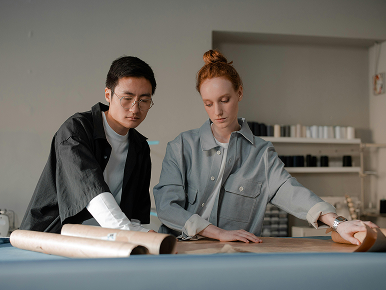
- Out-of-Square / Bay Window Angles: For polygonal bays (typically 45-degree or 30-degree angles), linear edge dimensions are insufficient. A rigid cardstock or corrugated template must be scribed against the wall boundary to capture out-of-plumb wall framing.
Thermal and Humidity Clearance Formula
Polyurethane and open-cell reticulated foams experience volumetric shifts under fluctuating thermal bands. Use the linear expansion allowance equation to ensure core foam does not bind against architectural framing:
Ctol = Lnominal × (ΔT × αfoam) + Mseam
Where Lnominal is the bench length, ΔT is the maximum seasonal temperature differential (°F), αfoam is the thermal expansion coefficient of polyurethane (approx. 4.0 × 10⁻⁵ in/in/°F), and Mseam represents the textile welt bulk factor (typically 0.125 inches per welted edge).
2. Core Dynamics: Foam Density, Indentation Load Deflection (ILD), and Layering
A frequent error in specifying Window Seat Cushions is conflating foam firmness with foam density. Foam density determines durability, cellular resilience, and lifespan; Indentation Load Deflection (ILD) dictates surface firmness and tactile resistance.
Foam Density vs. Indentation Load Deflection (ILD/IFD)
Density (measured in lbs/ft³ or kg/m³): Represents the raw polymer mass per cubic foot. Standard commercial-grade furniture uses 1.5 to 1.8 lb/ft³ foam, which softens prematurely under repetitive localized compression. Double win utilizes high-density (HD) polyurethanes ranging from 2.2 to 2.8 lb/ft³ for long-term dimensional retention.
ILD/IFD (ASTM D3574 Test B1): The force in pounds required to compress a 50 in² circular indenter foot into a 4-inch foam sample by 25% of its total thickness. A 30 lb ILD rating signifies medium-firm support suitable for active bench seating, while 45 lb ILD represents firm commercial-grade bench seating.
Acoustic & Mechanical Behavior Across Foam Cores
Select your internal core matrix based on moisture exposure, ultraviolet penetration, and dynamic weight load:
| Core Material | Density (lb/ft³) | ILD (25% Deflection) | Resilience / Hysteresis | Primary Application |
|---|---|---|---|---|
| Commercial High-Resilience (HR) | 2.5 – 3.0 | 32 – 38 lbs | Ball rebound > 60%; Low hysteresis loss | Primary indoor window seats, reading nooks, banquettes |
| High-Density Standard Poly | 1.8 – 2.2 | 28 – 34 lbs | Moderate recovery; Standard fatigue curve | Low-traffic residential alcoves, decorative display seats |
| Reticulated Open-Cell Dry Fast | 1.8 – 2.2 | 30 – 40 lbs | Porous cell structure; Instant drainage | Outdoor Cushions, marine craft, high-condensation sills |
| Bonded Composite Core (Latex + HR) | 3.5 – 4.5 | 36 – 45 lbs | Maximum structural memory; Zero bottom-out | Heavy-traffic dining banquettes, commercial waiting rooms |
Optimizing Cushion Thickness and Dacron Batt Wrapping
An un-wrapped foam slab results in loose fabric wear, cover slippage, and premature wrinkling. To achieve the correct profile, foam cores should be wrapped in 0.75 oz to 1.0 oz thermally bonded Dacron polyester fiber on both the top and bottom wear faces. This crown wrap generates positive internal pressure against the textile casing, yielding smooth radiused edges without compromising dimensional fit inside alcove walls.
3. Textile Engineering: Lightfastness, Abrasion, and Barrier Chemistry
Window seat installations are exposed to extreme environmental challenges: focused UV radiation through architectural glazing creates intense thermal cycling, while structural condensation introduces moisture risks. When specifying fabrics for Custom Made to Fit Cushions, mechanical and environmental durability parameters must be verified.
Ultraviolet Degradation Resistance (AATCC 16.3 Standard)
Direct exposure to window-filtered solar radiation causes rapid polymer chain photolysis in standard piece-dyed fabrics. Solution-dyed acrylics and engineered solution-dyed polyolefins infuse UV-stable pigments directly into the liquid polymer extrusion prior to staple fiber spinning:
- Solution-Dyed Acrylic (e.g., Sunbrella / Outdura): Evaluated to retain tensile strength and chromic stability beyond 1,500 to 2,000 continuous hours of xenon arc exposure (AATCC Grade 4.0 minimum).
- Yarn-Dyed / Piece-Dyed Polyester: Suffers UV degradation and dye breakdown within 200 to 500 hours, making it unsuitable for south-facing or unshaded fenestration.
Abrasion Mechanics: Wyzenbeek vs. Martindale
Surface longevity under continuous cyclic abrasion must be quantified according to international standards:
| Textile Category | Wyzenbeek (ASTM D4157 #10 Cotton Duck) | Martindale (ISO 12947-2 Wool Abradant) | Target Environment |
|---|---|---|---|
| Standard Residential | 15,000 double rubs | 20,000 cycles | Occasional use, formal bedrooms |
| Heavy-Duty Residential | 30,000 double rubs | 40,000 cycles | Family room bay windows, active reading benches |
| High-Traffic Commercial | 50,000 – 100,000 double rubs | 60,000+ cycles | Hotel lobbies, restaurant banquettes, public libraries |
Hydrophobic & Oleophobic Coatings
Liquid and organic soil resistance should rely on non-fluorinated short-chain or advanced C0 durable water repellent (DWR) surface finishes. In damp conditions, backing finishes must be assessed: high-moisture window thresholds and marine seating benefit from breathable polyurethane backings that prevent interior moisture migration while allowing interior air displacement under user impact.
4. Structural Fabrication, Edge Configuration, and Hardware Assembly
A cushion’s structural stability depends entirely on its assembly engineering. Under dynamic loading, poorly positioned seams, low-tenacity thread, or inadequate zipper profiles will fail long before the primary textile wears through.
Edge Styling and Mechanical Seam Integrity
Specifying edge details for Made to Order Cushions dictates both aesthetics and durability:
- Box Edge with Self-Welting (Piping): Incorporates a continuous 5/32” marine-grade polypropylene cord wrapped in bias-cut textile. Provides structural framing that keeps the cushion vertically aligned within millwork reveals.
- Knife-Edge Profiling: Top and bottom panels are stitched directly together without a middle boxing band. Recommended exclusively for thin cushions (depth ≤ 2.5 inches) or tight architectural clear-spaces.
- Double-Topstitched Seams: Common in contemporary and marine applications. Eliminates welt edges, providing a flat profile that resists snagging during linear sliding loads.
Thread Tensile and Environmental Ratings
Seams must be sewn using industrial lockstitch machines utilizing high-tensile threads:
- Bonded Polyester Thread (Size V-69 to V-92): Standard for high-tensile indoor and protected window applications. Offers exceptional breaking strength (approx. 11 to 14 lbs) and resistance to UV breakdown.
- PTFE Thread (Polytetrafluoroethylene): Chemical-, UV-, and mildew-immune threading specified for direct exterior window sills, marine environments, and severe sunlight exposure. Delivers a zero-degradation lifespan matching the outer casing.
Closure Architecture and Concealed Venting
To preserve structural integrity and ease maintenance, closures should feature heavy-duty #5 or #8 YKK continuous nylon coil zippers installed across the full rear length, wrapping a minimum of 3 to 4 inches around each rear corner. This extended zipper placement prevents stress tears on foam cores during insertion and extraction.
Because airtight fabrics impede compression, industrial sewing requires breathable micro-mesh bottom panels or concealed brass/mesh ventilation grommets on the back edge. These allow rapid air exhaust under instantaneous compressive loads, preventing pressure-induced seam blowout.
5. Regulatory Compliance and Fire Safety Standards
Commercial, institutional, and high-occupancy residential developments require compliance with stringent fire safety regulations. Double win manufactures seating products adhering to strict testing frameworks:
- TB 117-2013 (California Technical Bulletin 117): Assesses smolder resistance of interior upholstery resilient materials using cigarette ignition sources under laboratory test conditions.
- NFPA 260 / UFAC Class 1: Standard methods of tests and classification systems for cigarette ignition resistance of upholstery components.
- IMO Resolution A.652(16): Marine-grade safety performance criteria required when custom window cushions are integrated into offshore yachts, expedition vessels, or marine passenger crafts.
- OEKO-TEX Standard 100 / CertiPUR-US: Independent certification verifying that flexible polyurethane cores are manufactured without toxic ozone depleters, PBDEs, Tris flame retardants, lead, heavy metals, formaldehyde, or regulated phthalates.
6. Total Cost of Ownership (TCO) & Procurement Lifecycle
Procuring custom cushions requires evaluating total lifecycle value against initial capital expenditure. Low-density residential units may offer low initial costs, but rapid foam degradation and early textile wear drastically increase lifecycle expenses.
Life Cycle Analysis: Commercial-Spec vs. Low-Cost Alternative
| Evaluation Parameter | Low-Cost Consumer Cushion | Double Win Engineered Custom Cushion |
|---|---|---|
| Core Density | 1.2 – 1.5 lb/ft³ Polyurethane | 2.4 – 2.8 lb/ft³ High-Resilience Foam |
| Textile Rating | Piece-Dyed Polyester (<15k Rubs) | Solution-Dyed Performance Fabric (>50k Rubs) |
| Effective Service Life | 12 – 24 Months | 7 – 10+ Years |
| Maintenance Interval | Frequent steaming, early core replacement | Periodic surface vacuuming & spot treatment |
| Lifecycle Replacement Cost | High (Requires full re-procurement) | Minimal (Covers & cores engineered for modular replacement) |
Architectural Procurement & Specification Checklist
Follow this systematic procedure prior to releasing architectural bench cushion specifications for fabrication:
- Substrate Verification: Confirm dimensional plumb lines, baseboard profiles, wall irregularities, and corner angles using laser verification or physical templates.
- Environmental Assessment: Calculate UV daily exposure index, directional solar exposure, humidity levels, and condensation risks around the window sill.
- Load Profiling: Select foam density and ILD based on intended use (e.g., occasional reading at 30-34 ILD vs. daily dining banquette at 38-44 ILD).
- Textile Engineering: Specify minimum 30,000 Wyzenbeek double rubs and minimum 1,500 hours AATCC UV lightfastness for sun-facing fenestrations.
- Safety Conformance: Document regulatory burn requirements (TB 117-2013, NFPA 260, or IMO standards) based on project classification.
- Maintenance & Serviceability: Require full-span 3-sided YKK zippers and breathable under-casing vents to maintain compression equilibrium.
Frequently Asked Questions (FAQ)
What is the ideal foam thickness for a custom size window seat cushion?
The optimal thickness for built-in window seat installations is 3 inches (76 mm) to 4 inches (102 mm). A 3-inch profile paired with a high-density (2.5 lb/ft³) foam core provides sufficient ergonomic shock absorption to prevent bottoming out against the rigid wood substrate. Cushions under 2 inches require ultra-firm composite foam to prevent substrate contact, while cushions exceeding 5 inches can disrupt architectural sightlines and chair-rail heights.
How do you measure a bay window seat that has out-of-square angles?
For non-rectangular alcoves and bay windows, rely on physical pattern scribing rather than tape measurements. Lay heavy Kraft paper or corrugated template board directly across the bench top, pushing it flush against the rear sill and corner returns. Trace the exact perimeter edges with a carpenter’s pencil held flat against the wall face. Label all edges, confirm front-to-back depths at multiple locations, and submit the physical or digitized CAD template for precision CNC foam routing.
How should fabric be selected if the window receives intense, direct sunlight?
Direct exposure to unshaded windows demands 100% solution-dyed acrylic or solution-dyed olefin textiles. Unlike piece-dyed fabrics, where color is applied only to the exterior yarn surface, solution-dyed fibers integrate UV-stabilized pigments throughout the liquid polymer before fiber formation. This construction delivers lightfastness ratings of Grade 4.0 or higher after 1,500 to 2,000 hours of xenon arc exposure (AATCC 16.3).
What prevents a custom window seat cushion from sliding off a finished wood bench?
Several low-profile mechanical methods are available: (1) Non-skid silicone-grip mesh underlayments sewn directly onto the bottom casing panel; (2) Low-profile hook-and-loop (Velcro) fasteners attached via marine-grade adhesive to the wood platform and stitched to the cushion base; or (3) Rear anchor ties/straps fastened to discreet hardware anchors integrated into the back apron of the millwork.
Partner with Double win for Custom Commercial & Residential Cushions
Double win engineers precision-crafted seating components for challenging architectural applications. From luxury residential bay windows to heavy-use commercial banquettes and marine seating, our factory produces made-to-order cushions tailored to your exact measurements, foam density profiles, and textile specifications. Contact our engineering team today to review your project specifications or submit CAD files for custom fabrication.