Custom Bench Cushions Made to Fit Your Space
Design custom bench cushions for indoor benches, patio seating, window seats, dining nooks, RVs, and more. Choose your exact size, fabric, foam, and finishing details.
- Custom dimensions and shapes
- High-density 70D foam options
- 125+ fabric color options
- Waterproof and easy-care fabric choices
- Made to order for your space
Need help? Contact us before ordering if you are unsure about measurements, fabric, or cushion style.
Measuring Guide
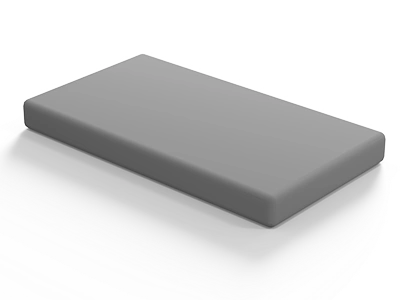
Bench Cushion Thickness
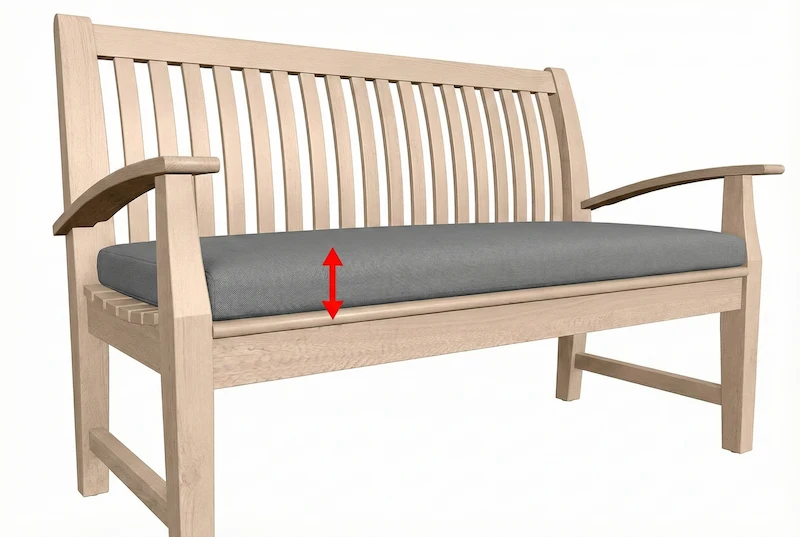
Armrest Consideration
If your bench has armrests, avoid cushions that are too thick, as this may cause the armrests to sit uncomfortably low. Always factor in the height of both the bench frame and armrests when making your selection.
Reference Existing Cushions
If you have an old bench cushion, measure its thickness to determine what works best for your setup.
Simulate with Books
Stack books on the bench to test different heights and find the ideal thickness for your comfort needs.
Bench Cushion Width
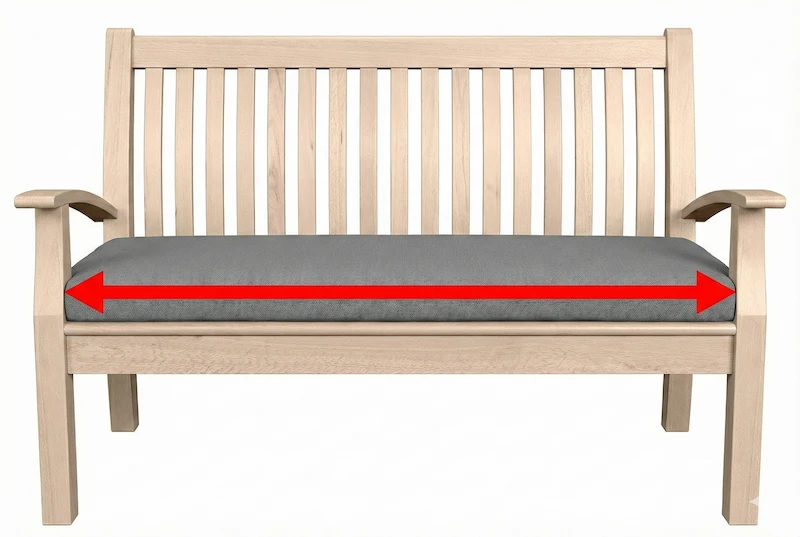
Box Edge Construction Note
Bench cushions with box edge construction will have a slight bulge on the front, sides, and back due to the filling material. If placing your cushion in a tight space, we recommend reducing the width by ½ inch to accommodate this natural expansion. For multiple cushions placed side-by-side in confined areas, reduce each cushion’s width by ½ inch to ensure a proper fit.
Bench Cushion Depth
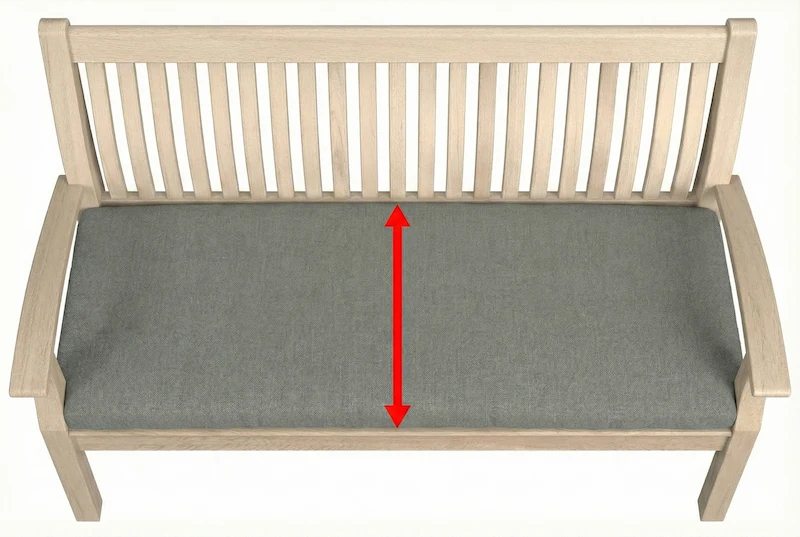
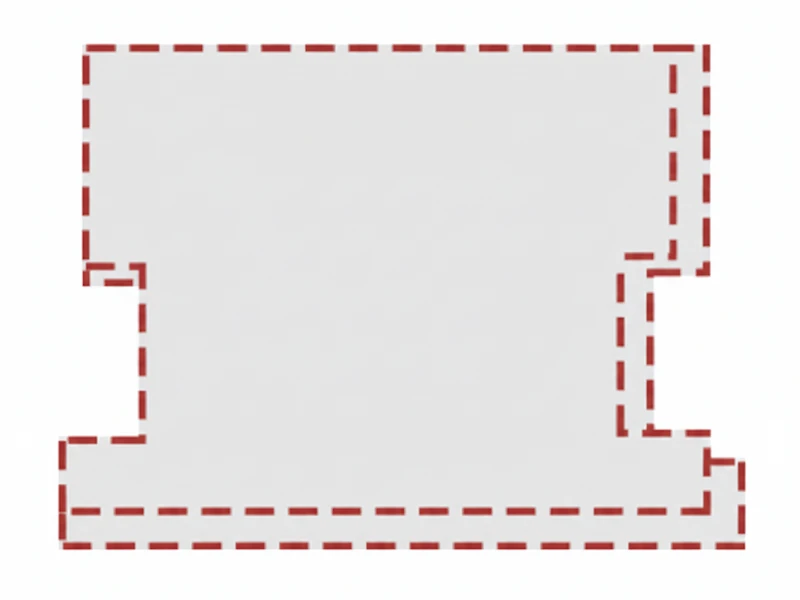
Measuring the Notches
Heads up on the corners—don’t miss the notching. You’ll likely need a cut-out on each of the four corners for a proper fit. Make sure you’re crystal clear on whether they need to be notched before finalizing the numbers.
✴︎ Ready to Order Your Custom Cushions?